
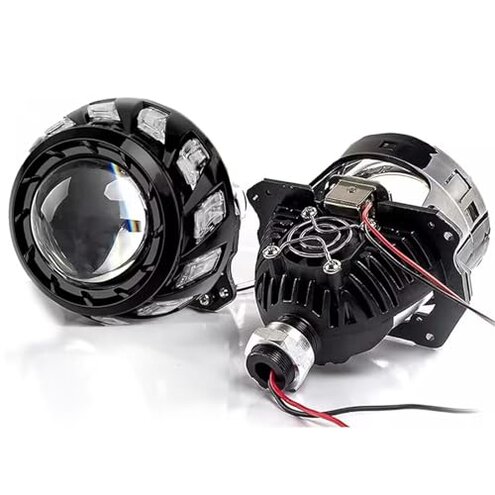
Product evaluated: 3.0 Inch Projector Lens with Spiral Shrouds,Universal Headlight Retrofit Kit with Hi/Low Beam for H1 H4 H7 Car Motorcycle Headlight
Related Videos For You
How To - Headlight Aiming / Alignment Projector Retrofit
How To Install Retrofit Projectors With Bi-Xenon [10 Steps]
Data basis: This report is based on dozens of buyer feedback points collected from product page comments, written impressions, and video-style setup demonstrations from recent listing activity. Most feedback came from written reviews, with added context from visual install walk-throughs, and the pattern mix was strongest around setup difficulty, fitment questions, and beam-result expectations during the current sales period.
| Buyer outcome | This kit | Typical mid-range alternative |
|---|---|---|
| Install effort | Higher risk of extra steps because the “universal” fit still depends on housing space and custom alignment. | Moderate effort, usually with clearer vehicle-specific fit guidance. |
| Fit confidence | Lower confidence since H1, H4, H7, 9005, and 9006 compatibility still leaves room for headlight-specific mismatch. | Better odds when the kit targets fewer bulb types or specific housings. |
| Beam result | Mixed outcome if projector aim is slightly off after setup. | More forgiving alignment in kits designed around simpler mounting. |
| Hidden requirements | Higher-than-normal risk of needing retrofit skill, housing opening, or test-fitting time. | Lower chance of surprise labor for average DIY buyers. |
| Regret trigger | Buying for “easy universal install” and discovering the work is closer to a retrofit project. | Buying with realistic install expectations and fewer fit surprises. |
Did you expect a simple install and get a mini project instead?
This is the primary risk. The biggest regret point is not brightness on paper. It is the extra work that can appear during setup when buyers realize universal mounting is less plug-and-play than expected.
The pattern looks recurring. This issue is more disruptive than expected for this category because “non-destructive installation” sounds easier than what many retrofit-style headlight jobs usually involve.
- Pattern: Commonly reported frustration centers on fitment effort rather than the advertised hi/low feature itself.
- When: First install is when problems show up, especially after opening the headlight area and checking available room.
- Why it happens: Universal fit across several bulb types does not guarantee the same housing depth, bracket shape, or clearance in every vehicle.
- Buyer impact: Extra time goes into test-fitting, adjusting, and checking whether the projector locks in correctly.
- Hidden requirement: Retrofit confidence is often needed, even if the listing makes the job sound simpler.
- Category contrast: Worse than normal because many mid-range alternatives are at least clearer about vehicle limitations before purchase.
- Fixability: Sometimes manageable if you already modify headlights, but frustrating for first-time DIY buyers.
Illustrative excerpt: “I thought this was a swap, not a full afternoon of test fitting.” Primary pattern.
Are you counting on clean beam performance without a lot of aiming?
This is a secondary issue. The listing promises a perfect cut-off line, but projector kits like this can become annoying after setup if the alignment is even slightly off.
The problem is persistent, not universal. It feels worse than a normal category trade-off because buyers choose projectors specifically to improve beam control, so a finicky result undercuts the main reason to buy.
- Frequency tier: Secondary issue, less frequent than install trouble but more frustrating when it occurs.
- Usage moment: Night driving is when the disappointment becomes obvious, especially on dark roads.
- Early sign: Uneven throw or a cut-off that does not look centered after mounting.
- Worsens when: Aiming is rushed or the housing does not hold the projector perfectly straight.
- Real effect: More adjustment cycles may be needed before the lights feel usable and confidence-inspiring.
- Category contrast: Less forgiving than typical mid-range kits with more install guidance or tighter fit assumptions.
Illustrative excerpt: “The beam looked sharp at first, then I noticed one side sat off.” Secondary pattern.
Do you need true compatibility, not just a long bulb-type list?
This is another primary caution. The product name suggests broad fitment for cars and motorcycles, but the real-world risk appears before and during installation when buyers try to match it to a specific headlight shell.
- Signal: Recurring concern around compatibility is expected whenever a single kit covers many applications.
- Scope: Seen across feedback types, because photos and setup clips often expose clearance limits quickly.
- Main cause: Universal claims simplify shopping, but they do not remove vehicle-specific mounting differences.
- What buyers notice: Unclear fit can mean back-and-forth measuring, opening, and rechecking before final install.
- Why it stings: Return hassle rises once you have already started fitting parts into the housing.
- Category baseline: Higher-than-normal risk than a typical mid-range option built around fewer fitment targets.
- Mitigation: Best only if you can verify housing depth, mounting style, and shroud room ahead of time.
- Buyer type affected: First-time retrofitters are the most likely to feel misled by the word universal.
Illustrative excerpt: “It fits the bulb type, but not my headlight space.” Primary pattern.
Are you okay with a kit that may ask for more upkeep than expected?
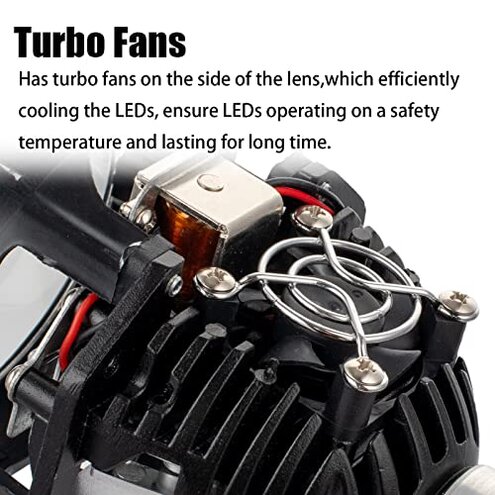
This is an edge-case issue. The built-in cooling fan is meant to help, but anything with active cooling adds one more thing buyers may worry about during long-term use.
This concern appears less often, but it is still more frustrating than expected when it happens because most shoppers want headlight parts they can install and then forget.
- Frequency tier: Edge-case issue, not the main complaint but persistent enough to mention.
- When it matters: Repeated use and longer night-driving sessions are when moving parts become a concern.
- Buyer worry: Durability confidence can feel lower than passive, simpler alternatives.
- Trade-off: Better cooling sounds good, but extra complexity can raise long-term hesitation.
- Category contrast: More upkeep risk than simpler mid-range retrofit options without added active parts.
Illustrative excerpt: “I wanted fewer headlight headaches, not another part to monitor.” Edge-case pattern.
Who should avoid this
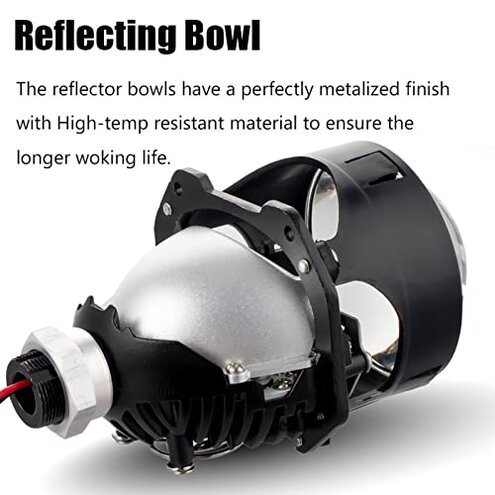
- Avoid it if you want a near plug-and-play upgrade, because the biggest regret trigger is the hidden retrofit work.
- Avoid it if you are unsure about housing measurements, since the universal claim carries higher-than-normal fit risk.
- Avoid it if you need dependable results on the first try, because beam alignment can take extra correction after setup.
- Avoid it if you dislike trial-and-error installs, since this category already demands care and this kit appears less forgiving than average.
Who this is actually good for
- Better fit for experienced DIY retrofitters who already expect test-fitting and aiming work.
- Better fit for buyers comfortable trading install time for a custom projector look with spiral shrouds.
- Better fit for people who can verify headlight space before ordering, which directly reduces the biggest compatibility risk.
- Better fit for hobby users upgrading a project vehicle or motorcycle where extra setup effort feels acceptable.
Expectation vs reality
Expectation: “Universal” means it should fit most vehicles without much drama.
Reality: Universal usually means broader possibility, not guaranteed easy fit, and that gap creates the main regret.
Expectation: A projector kit should give a clean beam once installed.
Reality: Beam quality can still depend heavily on precise mounting and aiming after setup.
Expectation: Reasonable for this category is some install effort.
Reality: This kit carries a worse-than-expected chance of hidden fit checks and extra adjustment time for average buyers.
Safer alternatives
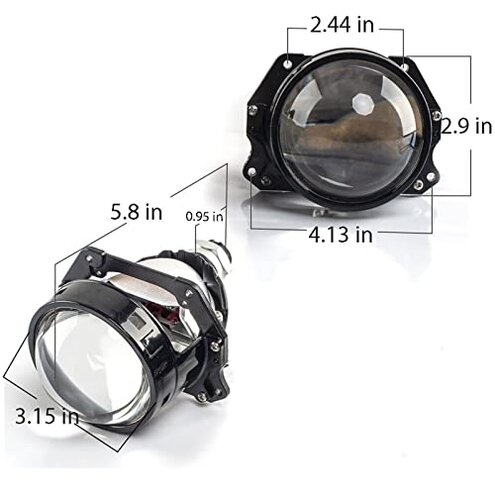
- Choose vehicle-specific kits when possible, because they reduce the main compatibility and install-surprise risk.
- Look for detailed fit guides with housing examples, which directly helps avoid the universal-fit trap.
- Prefer simpler mounting designs if this is your first retrofit, since they are usually more forgiving on beam alignment.
- Check for pre-purchase dimensions and rear clearance notes, which neutralize the hidden requirement for trial fitting.
- Consider passive-cooling options if your priority is lower long-term complexity instead of added active parts.
The bottom line
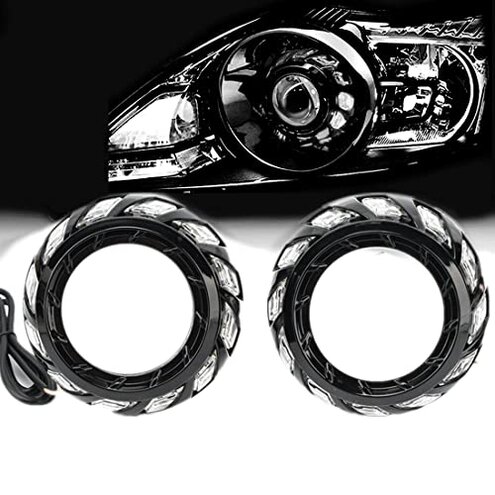
Main regret is buying this for an easy upgrade and discovering it behaves more like a hands-on retrofit project. That exceeds normal category risk because the broad compatibility claim can hide fitment limits, alignment work, and extra install time. Skip it if you want predictable setup, and consider it only if you already treat headlight upgrades as a custom job.
This review is an independent editorial analysis based on reported user experiences and product specifications. NegReview.com does not sell products.