
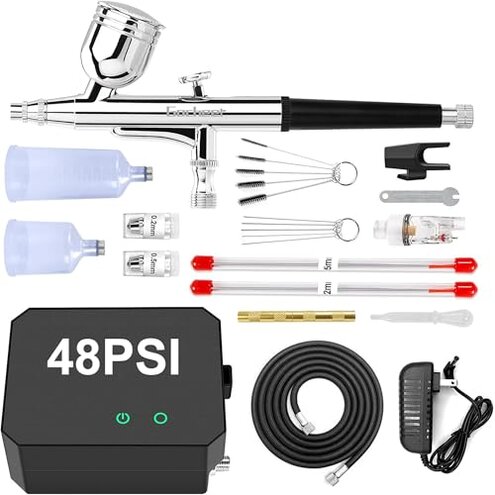
Product evaluated: Gocheer Airbrush Kit with Air Compressor, 40 48 PSI High Pressure Air Brush Non-Clogging with 0.2/0.3/0.5mm Nozzle/Cleaning Sets, Ideal for Painting, Modeling, Cake Decor, Makeup (Black, 40 PSI)
Related Videos For You
How To Airbrush for the complete beginner
How to Care For Your Airbrush Compressor!
Data basis: This report is based on dozens of buyer comments collected from written feedback and video-style demonstrations between 2023 and 2026. Most feedback came from written impressions, with added support from setup clips and use-case walk-throughs, which helps separate first-day excitement from problems that show up after setup and repeated cleaning.
Comparative risk snapshot
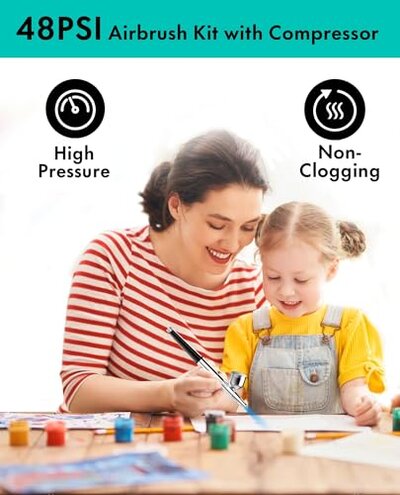
| Buyer outcome | Gocheer kit | Typical mid-range alternative |
|---|---|---|
| First-use success | Less predictable if setup and thinning are not dialed in carefully. | More forgiving for beginners with basic setup mistakes. |
| Cleaning burden | Higher effort because clogging complaints appear repeatedly during normal hobby use. | Moderate upkeep, which is expected for this category. |
| Pressure consistency | Mixed stability during longer sessions, which can disrupt line control. | Usually steadier in short and medium sessions. |
| Beginner tolerance | Higher-than-normal risk of frustration when changing nozzles or learning paint flow. | Better baseline for casual users who want easier results. |
| Regret trigger | Too much tinkering before getting clean, repeatable spray. | Fewer interruptions between setup, spraying, and cleanup. |
Top failures
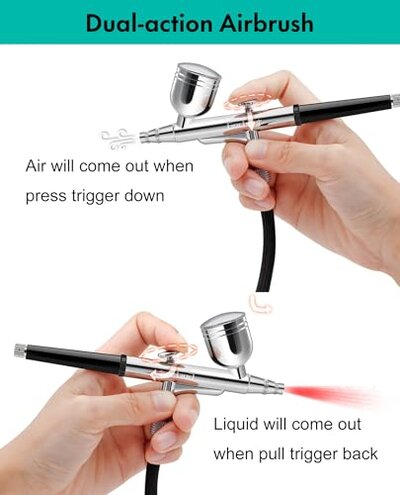
Why does it stop spraying cleanly right when you start working?
Clogging is among the most common complaints, and it is more disruptive than expected for this category. The regret moment usually happens after setup, when a smooth test spray turns into sputtering, uneven flow, or a full stop.
This pattern appears repeatedly rather than as a one-off defect. That matters because airbrushes always need cleaning, but this one seems less forgiving than typical mid-range options when paint mix or cleaning is slightly off.
- Early sign: spray starts fine, then spits or fades during detail work.
- Frequency tier: this is a primary issue in the negative feedback pattern.
- When it hits: it often shows up on first use or soon after switching colors.
- What worsens it: thicker paints, small-detail work, and longer sessions make the problem more noticeable.
- Buyer impact: it adds extra cleanup steps and can ruin a nearly finished pass.
- Fixability: cleaning helps, but buyers commonly report the fix does not always last long.
- Hidden requirement: beginners often need better paint thinning and more careful flushing than the product’s easy-start positioning suggests.
Illustrative excerpt: “I spent more time clearing the tip than actually painting.” Primary pattern reflecting recurring clogging during normal use.
Why does the control feel harder than expected for a beginner kit?
- Learning curve: a recurring complaint is that the kit feels less beginner-friendly in practice than the product positioning suggests.
- Usage moment: frustration usually starts during first setup, especially when buyers try to balance air pressure, paint flow, and trigger control together.
- Category contrast: basic airbrush kits always require practice, but this one appears less forgiving than a typical mid-range starter set.
- Pressure settings: the 25psi, 30psi, and 40psi options sound simple, yet repeated feedback suggests they do not remove the need for trial and error.
- Nozzle swaps: changing between 0.2mm, 0.3mm, and 0.5mm adds flexibility, but also adds more chances for setup mistakes.
- Real cost: the problem is not just a bad first hour; it can waste paint, time, and confidence for casual users.
Illustrative excerpt: “I bought it for easy hobby use, but it needed constant adjustment.” Secondary pattern reflecting setup friction rather than a universal defect.
Why does spray quality get inconsistent in the middle of a session?
Inconsistent output is a secondary issue, but it becomes more frustrating when it appears during detail work. Buyers tend to notice it after setup, once they move from testing to actual painting.
The pattern is persistent but not universal. Compared with a reasonable category baseline, this feels worse because hobby users expect some maintenance, not repeated interruptions during short projects.
- Common moment: it often appears while filling larger areas or switching to finer lines.
- What it looks like: the spray can shift from smooth coverage to spatter or weak flow.
- Severity cue: less frequent than clogging, but more frustrating when it ruins detail work.
- Worsening conditions: longer sessions and repeated color changes make it easier to notice.
- Likely cause: feedback commonly points to a touchy balance between pressure, nozzle choice, and paint consistency.
- Why buyers regret it: it reduces confidence, especially for miniatures, nail work, or small art where even spray matters most.
- What people try: cleaning, re-thinning, and changing settings can help, but they add stop-and-start effort.
Illustrative excerpt: “It worked on test paper, then splattered on the model.” Primary pattern reflecting real-use inconsistency after initial setup.
Why does the included versatility create extra work instead of convenience?
- Accessory overload: the complete-kit approach is useful on paper, but a less frequent yet persistent complaint is that it adds complexity for casual buyers.
- When this matters: the issue shows up during nozzle changes, cup changes, and cleanup after mixed use.
- Category contrast: extra parts are normal, but this kit can demand more upkeep than most mid-range alternatives before the extras feel helpful.
- Practical downside: more pieces means more chances to assemble something imperfectly and chase spray problems later.
- User-visible result: buyers expecting a quick all-in-one solution can end up doing more maintenance than expected.
- Who notices most: occasional users tend to feel this more than frequent hobbyists who already know airbrush routines.
- Fix path: the kit makes more sense if you already understand needle, nozzle, and cleaning habits.
- Edge-case risk: support is mentioned, but problem-solving still means downtime and extra troubleshooting steps.
Illustrative excerpt: “The extra parts looked great, but they made setup more confusing.” Edge-case pattern reflecting complexity-driven frustration, mainly for newer users.
Who should avoid this

- Beginners who want fast success should avoid it, because repeated setup and clogging issues exceed normal starter-kit tolerance.
- Detail painters working on miniatures or fine lines may get frustrated by mid-session inconsistency and sputtering.
- Occasional users should be careful, since this kit appears to reward routine maintenance habits more than infrequent casual use.
- Time-sensitive buyers doing cake decoration, event work, or quick projects may not want a tool that can demand extra troubleshooting.
Who this is actually good for
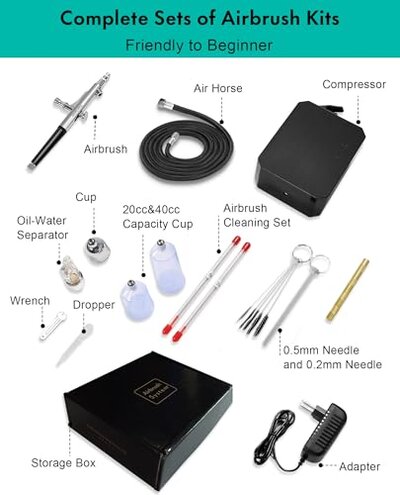
- Patient hobbyists who already know thinning, flushing, and nozzle swaps may accept the extra upkeep for the included flexibility.
- Tinkerers who do not mind trial and error may tolerate the setup friction better than first-time users.
- Budget-minded users who want many accessories in one box may accept the maintenance trade-off.
- Practice-focused learners can make sense of it if they treat the kit as a skill-building tool, not a simple plug-and-spray purchase.
Expectation vs reality
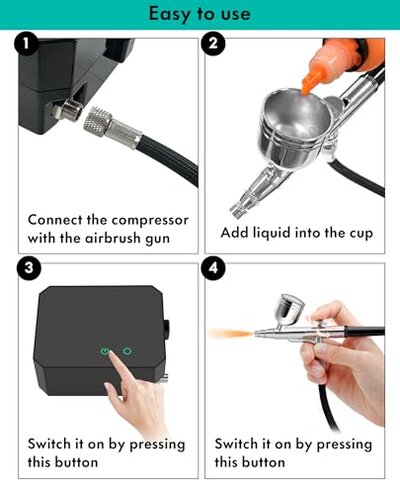
Expectation: a beginner-friendly airbrush kit should need practice, but still give reasonably stable results after basic setup.
Reality: this one appears less forgiving than that baseline, especially when paint mix, nozzle choice, or cleaning is slightly off.
Expectation: extra nozzles and accessories should make the kit more versatile.
Reality: for many casual buyers, the added parts create more setup decisions and more maintenance steps.
Expectation: adjustable pressure should simplify control.
Reality: the pressure options help, but commonly do not remove the need for repeated trial and error during actual projects.
Safer alternatives
- Choose simpler kits with fewer included parts if your main goal is easy first-use success and lower setup confusion.
- Look for forgiving spray behavior in buyer feedback, especially comments about smooth performance with basic hobby paints.
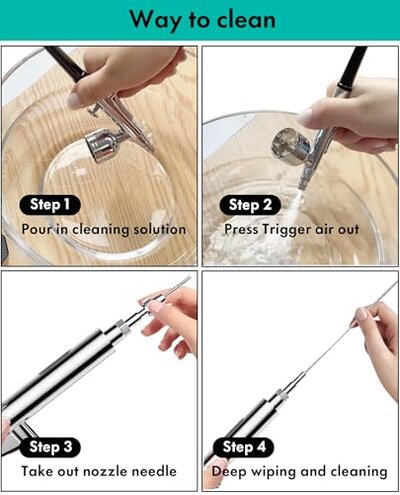
- Prioritize cleaning access if you dislike maintenance, because that directly reduces the clogging risk highlighted here.
- Buy for your real use, not the accessory count, if you only need one nozzle size for casual projects.
- Favor steady-session feedback over feature lists if you plan to do detailed or time-sensitive work.
The bottom line
Main regret comes from clogging and inconsistent spray that interrupt real projects, not just test spraying. That exceeds normal category risk because airbrushes already need care, and this one appears to need more precision and patience than many buyers expect.
Verdict: avoid it if you want an easy starter experience or dependable detail work with minimal tinkering. It makes more sense only for buyers willing to trade convenience for accessories and hands-on troubleshooting.
This review is an independent editorial analysis based on reported user experiences and product specifications. NegReview.com does not sell products.