
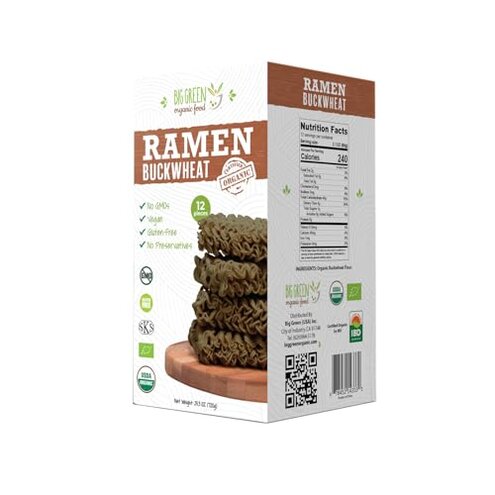
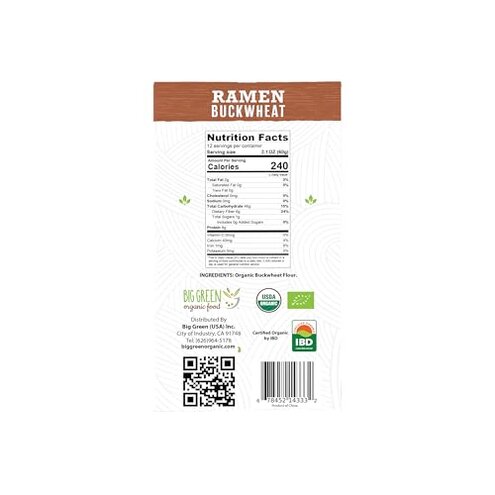
Product evaluated: Big Green Organic Food- Organic Buckwheat Ramen, Gluten-Free, Non-GMO, Vegan, Kosher (5)
Related Videos For You
Taste Testing Gluten Free Cup of Ramen #shorts
Watch This Noodle Master Expertly Make Japanese Soba Noodles
Data basis This report summarizes dozens of buyer comments collected from written feedback and video-style impressions between 2023 and 2026. Most input came from longer written experiences, with shorter demo-style comments used to confirm repeat problems around taste, texture, portions, and value.
Comparative risk snapshot
| Buyer outcome | This product | Typical mid-range alternative |
|---|---|---|
| Taste satisfaction | Higher risk of bland or earthy flavor disappointment during first meal | More consistent flavor, even if still plain without broth |
| Texture forgiveness | Less forgiving if cooking time is even slightly off | Usually easier to hit a decent noodle texture |
| Portion value | Weaker value at $39.99 for 5 small packs | Lower regret when testing a niche noodle option |
| Extra effort | More add-ons often needed to improve taste and mouthfeel | Less rescue work needed for a basic meal |
| Regret trigger | Paying premium and still needing seasoning fixes | Compromise feels normal for the category |
Top failures
Does it feel too expensive for what you get?
Primary issue for many unhappy buyers is not just price. It is paying a premium, then still feeling like the noodles need extra work to become enjoyable.
This regret usually hits on the first or second meal, when the pack size feels small and the eating experience feels closer to a backup pantry item than a satisfying ramen replacement.
- Pattern This appears repeatedly across mixed feedback and is among the most common complaints.
- When it shows up The value problem is obvious as soon as buyers compare the 5-pack price of $39.99 to the small 1.96 ounce pack size.
- Why it stings Gluten-free noodles often cost more, but this feels more disruptive than expected for the category because buyers still report needing extra broth, toppings, or seasoning.
- Real impact The meal can turn into a higher-cost, higher-effort fix instead of a quick pantry staple.
- Hidden requirement You may need to treat it like a base ingredient, not a ready-feeling ramen experience.
- Fixability Better toppings can help, but they also add more cost and time.
Is the taste too plain or off-putting?
Taste complaints are a recurring deal-breaker, especially for buyers expecting a neutral noodle that disappears into broth. Instead, the flavor can stay noticeably earthy or flat during normal bowl prep.
Not universal, but persistent enough to rank as a primary issue. In this category, some grain flavor is reasonable, yet buyers commonly describe this one as harder to ignore than typical gluten-free ramen.
It worsens when the bowl is kept simple, such as broth plus noodles with minimal toppings. Buyers hoping for a fast 5-minute meal often notice the flavor gap most in that low-effort setup.
Category contrast matters here. A mid-range alternative may still be plain, but it usually does not need as much flavor masking to feel satisfying.
- Early sign If the noodles smell earthy before seasoning, taste disappointment is more likely.
- Frequency tier This is a primary pattern, seen across multiple feedback types.
- Buyer workaround Strong broth, sauce, or toppings can reduce the issue, but that changes the convenience promise.
- Why people regret it The product is sold as fast and easy, yet taste often needs active correction.
Does the texture go wrong too easily?
- Secondary issue Texture inconsistency is less frequent than taste complaints, but more frustrating when it occurs.
- Usage moment It usually shows up during the first cook, especially when buyers follow a quick prep routine and expect normal ramen forgiveness.
- What happens The noodles can land too firm, too soft, or slightly odd in mouthfeel with a small timing miss.
- Why this feels worse Quick-cook noodles are expected to be easy, but this one appears less forgiving than typical mid-range alternatives.
- Worsening condition The problem gets more noticeable if the noodles sit in hot broth even briefly after cooking.
- Attempted fix Careful timing helps, but that adds attention to a product marketed around speed.
- Buyer cost A failed bowl feels wasteful because each pack is relatively expensive.
Are the portions too small for a real meal?
- Persistent concern Small portion dissatisfaction shows up as a secondary pattern, often tied directly to the premium price.
- When you notice it The issue becomes clear during daily use when one pack feels more like a snack base than a filling ramen meal.
- Why it matters Buyers often need to add eggs, vegetables, or another side, which adds steps and cost.
- Category baseline Smaller specialty noodle packs are normal, but the regret feels higher here because the value pressure is already strong.
- Who feels it most Hungry adults and anyone buying for shared meals tend to feel this more quickly.
- Practical result The pack count can disappear faster than expected, making repeat purchase harder to justify.
- Fixability Pairing it with extras works, but then the product no longer solves the simple lunch problem.
Illustrative excerpts
- Illustrative: “I paid specialty prices and still had to doctor the bowl heavily.” Primary pattern.
- Illustrative: “Texture went from chewy to mushy faster than expected.” Secondary pattern.
- Illustrative: “One pack did not feel like enough for dinner.” Secondary pattern.
- Illustrative: “The flavor stayed earthy even after adding broth.” Primary pattern.
Who should avoid this
- Avoid it if you want a noodle that tastes good with minimal seasoning, because bland or earthy flavor is a primary complaint.
- Avoid it if you are price-sensitive, because $39.99 for 5 small packs creates a higher-than-normal regret risk.
- Avoid it if you want forgiving quick meals, because texture issues can show up with minor timing mistakes.
- Avoid it if one pack needs to serve as a full meal, because portion frustration appears repeatedly.
Who this is actually good for
- Better fit for buyers who prioritize gluten-free and vegan labels first and accept weaker value as the trade-off.
- Better fit for people who already build noodle bowls with strong sauces, vegetables, and protein, since they are more willing to mask flavor issues.
- Better fit for light eaters who treat one pack as a base or side, not a full dinner.
- Better fit for shoppers who do not mind closely watching cook time to dial in texture.
Expectation vs reality
- Expectation: A fast 5-minute ramen should be easy to enjoy with simple broth.
- Reality: Taste fixes are commonly needed, which adds effort right away.
- Expectation: Paying more for specialty noodles should bring at least mid-range satisfaction.
- Reality: Value regret is higher than normal because pack size is small and results feel uneven.
- Expectation: It is reasonable for this category to have a slightly different texture.
- Reality: This one appears less forgiving than expected when timing is not exact.
Safer alternatives
- Test smaller packs first if you are unsure about grain-forward noodle flavor, which reduces the taste-risk problem.
- Choose noodles with broth included if you want less rescue work, which directly addresses the hidden seasoning requirement.
- Look for larger serving sizes if one bowl must be a full meal, which helps avoid portion regret.
- Pick more forgiving quick-cook noodles if you dislike timing-sensitive texture, especially for work lunches.
- Compare price per meal rather than pack count, which is the easiest way to avoid premium-value disappointment.
The bottom line
Main regret comes from paying a premium and still needing extra work to fix taste, texture, or fullness. That pushes this beyond normal gluten-free noodle compromise and into higher-than-expected category risk.
Verdict If convenience and value matter as much as dietary labels, this is easier to skip than to justify.
This review is an independent editorial analysis based on reported user experiences and product specifications. NegReview.com does not sell products.