
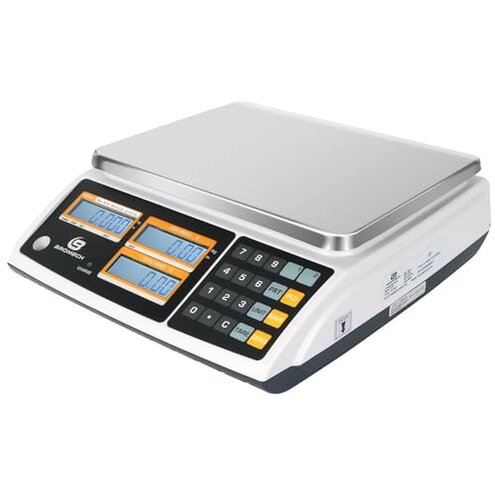
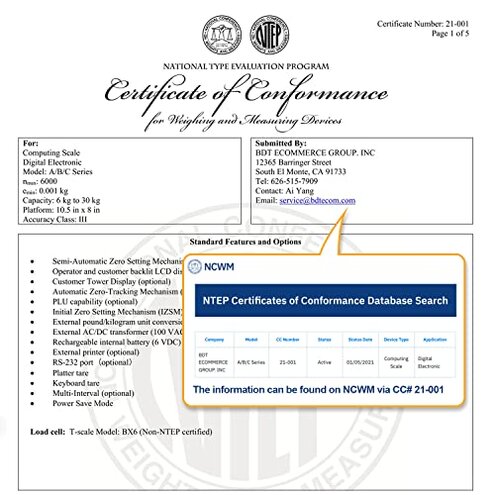
Product evaluated: BROMECH Price Computing Scale NTEP Certified for Legal Trade Rechargeable, Commercial Grade with Dual LCD Display, 60lb Stainless Steel Platform for Meat Shop, Deli, Produce Farmers Market COC#21-001
Related Videos For You
HOW TO use a Commercial Bargains Digital Computing Price Scale ACS-03
Data basis: This report summarizes dozens of buyer comments gathered from written feedback and video-style demonstrations collected from 2021 to 2024. Most feedback came from longer written accounts, with shorter setup impressions and use clips providing supporting context on daily operation, legal-trade use, and checkout visibility.
| Buyer outcome | BROMECH scale | Typical mid-range alternative |
|---|---|---|
| Setup confidence | Higher effort if you need trade-ready setup quickly. | Usually simpler for first-day business use. |
| Display readability | Mixed when lighting or viewing angle is not ideal. | More forgiving in normal counter use. |
| Daily workflow | More step-heavy when switching units or PLU habits matter. | Often smoother for repeated transactions. |
| Power dependence | Higher-than-normal risk if you rely on battery convenience. | Usually steadier with fewer power-related complaints. |
| Regret trigger | Looks compliant but adds friction during real selling. | Less likely to surprise casual market sellers. |
Need it to work fast on day one?
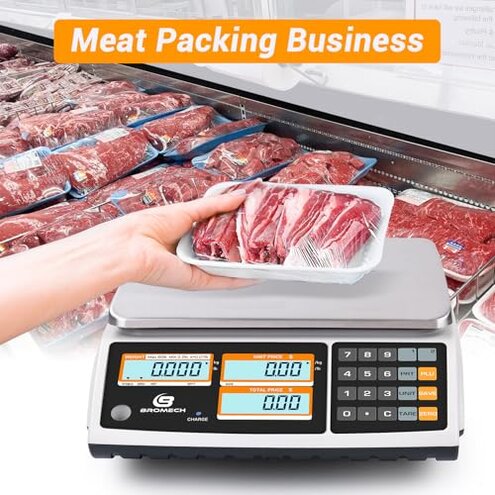
This is a primary issue. The biggest regret moment appears during first setup, when buyers expect a straightforward legal-trade scale and instead face extra learning steps. That trade-off feels more disruptive than expected because this category is usually bought for quick business use, not tinkering.
The pattern looks recurring. It is not universal, but it appears repeatedly across mixed feedback from people trying to start selling right away. It tends to feel worse when the scale is needed for a market opening, deli counter switch, or same-day replacement.
- Early sign: Confusion starts when buyers try to move from basic weighing to price computing without a clear routine.
- Frequency tier: This is a primary complaint and shows up more often than cosmetic concerns.
- When it hits: It usually appears after unboxing and before the first full selling session.
- Why it stings: A legal-trade scale should feel business-ready, but this one can ask for more trial and error than typical mid-range units.
- Buyer impact: The result is lost time before service begins, which matters more in markets and small food counters.
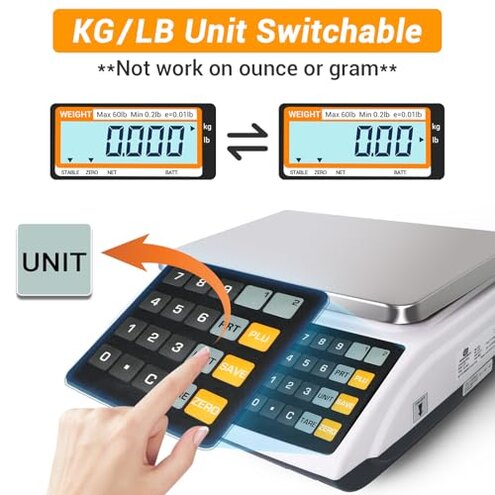
- Hidden requirement: You may need more practice time than expected to get comfortable with unit switching and PLU habits.
Illustrative excerpt: “I thought I could start selling immediately, but setup slowed me down.” Primary pattern.
Counting on the display to stay easy to read?
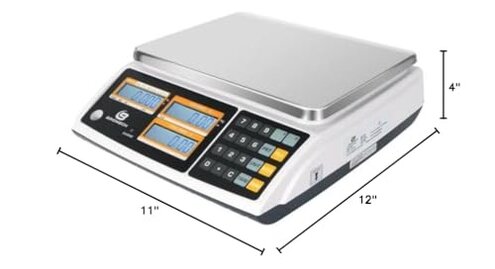
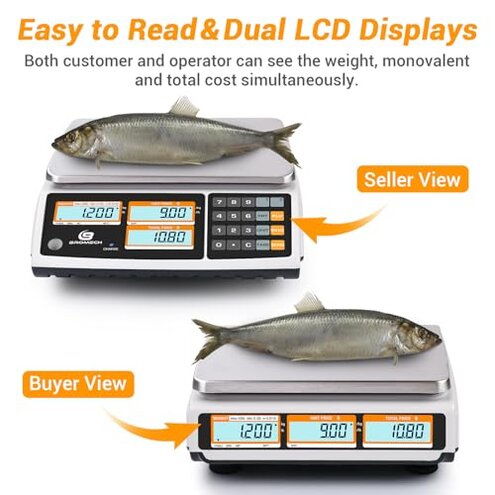
This is a secondary issue. The display is advertised as easy to read, but the real frustration shows up during live use when customers or operators need quick visibility. In this category, readable numbers are the baseline, so any hesitation feels worse than normal.
- Pattern: Readability complaints are persistent, though less frequent than setup friction.
- Usage moment: The problem shows up most during busy counter work or outdoor market lighting changes.
- What buyers notice: People mention needing a better viewing position than expected.
- Why it matters: If a customer cannot read price or weight quickly, the sale feels less smooth.
- Category contrast: Mid-range commercial scales are usually more forgiving about glance reading from both sides.
- Fixability: Better placement can help, but that adds counter constraints you may not want.
- Long-session effect: The annoyance grows during repeated transactions, not just a single test weigh-in.
Illustrative excerpt: “The numbers are there, but not always easy in real selling light.” Secondary pattern.
Planning to run mostly on battery?
This is another primary issue. The regret moment comes when buyers choose it for portable use and then become less confident about power convenience over repeated sessions.
The pattern is recurring. It is not every unit, but battery-related concern appears often enough to matter because portability is a major buying reason here. That makes it more frustrating than expected for a market scale, where battery trust is usually part of the baseline.
It gets worse in longer days. The issue matters most during extended stalls, pop-up selling, or any place where outlet access is awkward. A scale that pushes you back toward wall power loses one of the main reasons buyers choose this format.
- Frequency tier: This sits among the most disruptive complaints when it happens.
- Buyer consequence: People worry more about interrupted workflow than about raw battery claims.
- Why worse than normal: Comparable mid-range options are often more confidence-inspiring for unplugged use.
- Workaround: Keeping the adapter nearby helps, but that reduces placement freedom.
Illustrative excerpt: “I bought it for markets, but still felt tied to the cord.” Primary pattern.
Expecting smooth repeat transactions every day?
- Core issue: Daily use friction is a secondary complaint, but it becomes more annoying than expected because this product is built for repeated sales.
- When it appears: It shows up during routine selling, especially when switching products, units, or memorized pricing habits.
- Pattern signal: The theme is less frequent than setup trouble, but more frustrating once you are already relying on it.
- What buyers feel: Small extra steps can make the scale feel slower than a typical mid-range checkout tool.
- Why this exceeds baseline: In this category, buyers reasonably expect the scale to disappear into the workflow, not demand attention.
- Hidden cost: The burden is not repair cost but extra time across many transactions.
- Best-case mitigation: If one person uses it the same way daily, the friction may be manageable.
- Worst-case context: Shared stations or rushed sales make the routine feel less forgiving.
Illustrative excerpt: “It works, but every sale takes more button-thought than I wanted.” Secondary pattern.
Who should avoid this

- New sellers who need a scale that feels intuitive on the first morning should avoid it because setup friction appears repeatedly.
- Outdoor vendors who depend on quick readability in changing light may want a more forgiving display.
- Battery-first buyers should be careful because portable use confidence seems less steady than a normal mid-range expectation.
- Busy shared counters should skip it if multiple workers need a fast, obvious workflow without extra button memory.
Who this is actually good for
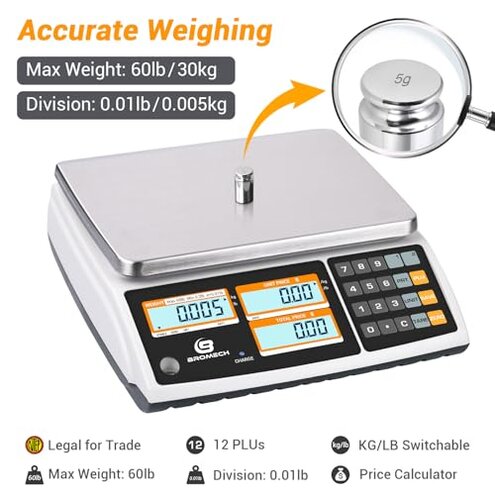
- Single-operator stalls can do fine if one person learns the routine and accepts more setup time.
- Plug-in counters make more sense if outlet access is easy and battery use is only occasional.
- Low-volume selling is a better fit when small workflow delays do not affect a long line.
- Compliance-focused buyers may accept the learning curve if legal-trade certification matters more than convenience.
Expectation vs reality
Reasonable expectation: A mid-range commercial scale should be quick to learn and calm to use in the first week.
Reality: This one appears to ask for more practice and patience than many buyers expect.
Expectation: A dual display should stay easy to read from normal selling positions.
Reality: Readability can feel more position-dependent during real counter or market use.
Expectation: A rechargeable scale should feel free-moving for temporary setups.
Reality: Some buyers still end up planning around wall power, which weakens the portability advantage.
Safer alternatives
- Prioritize simple controls if first-day setup matters more than extra features or legal-trade wording.
- Look for clearer display feedback if customers need to read weight and price from different angles.
- Choose proven battery convenience if your selling space changes often and outlets are unreliable.
- Test workflow steps before buying if you use PLUs or unit changes often, because daily button friction compounds fast.
The bottom line
Main regret trigger: The biggest problem is not basic weighing. It is the extra setup and workflow friction that shows up when buyers need a smooth selling tool.
Why it exceeds normal risk: Mid-range commercial scales are expected to be easier on day one and less demanding during repeat transactions. If you need quick learning, strong battery confidence, or easier readouts, this is a product to approach cautiously.
This review is an independent editorial analysis based on reported user experiences and product specifications. NegReview.com does not sell products.