
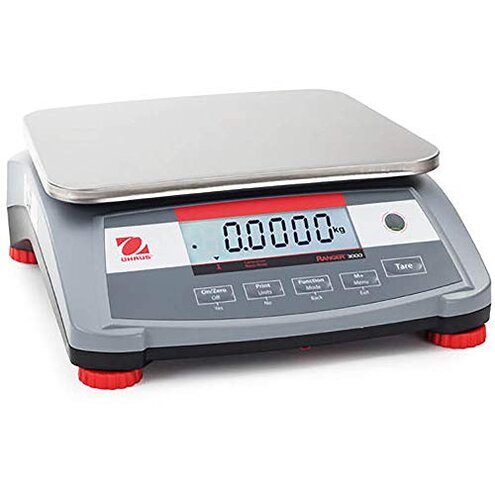
Product evaluated: Ohaus R31P30 Ranger 3000 Compact Bench Scale, 30 kg (30031711)
Related Videos For You
How to use the A&D EK 1200i Bench Scale
How to Check if Your Scale is Accurate Without Calibration Weights (Using Coins)
Data basis: This report uses dozens of aggregated buyer impressions collected from written feedback and video demonstrations between 2023 and 2026. Most feedback came from written user experiences, with video use-cases helping confirm what happens during setup and daily weighing.
| Buyer outcome | Ohaus Ranger 3000 | Typical mid-range alternative |
|---|---|---|
| First-day setup | More demanding; hidden setup steps can slow first use. | Usually simpler; basic weighing is ready faster. |
| Daily use flow | Can feel fussy when switching tasks or checking stable readings. | More forgiving for routine weigh-and-go use. |
| Accuracy confidence | Mixed comfort; precise specs look strong, but trust drops if readings seem inconsistent in real use. | More predictable for ordinary bench tasks. |
| Learning curve | Higher-than-normal risk for non-specialist buyers. | Moderate; fewer menu or process surprises. |
| Regret trigger | Paying pro-level money and still needing extra time to get reliable routine use. | Usually lower; fewer workflow surprises at this price tier. |
Do you just want to weigh items quickly without reading a manual twice?
This is a primary issue in aggregated feedback. The regret moment usually happens during first setup, when buyers expect simple weighing but run into extra steps and menu learning.
The trade-off is clear. You get advanced functions like parts counting and check weighing, but common complaints say the scale feels less approachable than expected for routine use.
Pattern: This appears repeatedly across buyer summaries, though it is not universal. It tends to frustrate people most when they only need basic weighing, not the extra modes.
Category contrast: Some bench scales need brief setup, but this feels more disruptive than expected because the product is compact and looks straightforward.
Illustrative: “I wanted a quick bench scale, not a small project.”
Pattern level: This reflects a primary pattern.
Will the readings feel dependable every time you use it?
- Severity: This is a primary complaint, because confidence matters more than raw specs once daily use begins.
- When it shows up: The concern appears after setup, especially when users check repeated items and expect the same result each time.
- Frequency: Recurring feedback points to trust issues that are less common than setup friction but more frustrating when they happen.
- What buyers notice: Small reading shifts or hesitation can make users second-guess whether the number is ready to trust.
- Why it stings: For a scale with very fine readability claims, buyers expect confidence without babysitting.
- Category contrast: Many scales need a stable surface, but this can feel less forgiving than typical alternatives when users want fast repeat checks.
- Impact: The result is extra re-weighing, which adds time and undercuts the reason many people buy a bench scale.
Illustrative: “The number looked precise, but I still kept weighing twice.”
Pattern level: This reflects a primary pattern.
Are the extra features actually useful, or do they just add friction?
- Feature load: This is a secondary issue, but it shows up often enough to matter for ordinary buyers.
- Context: It usually appears during daily use when switching between simple weighing and other modes like counting or check weighing.
- Hidden requirement: Buyers may need time to learn modes they never planned to use, just to avoid confusion.
- What repeats: Persistent comments suggest the interface can feel built for trained use rather than casual use.
- Real effect: Instead of speeding work up, the feature set can create extra button presses and uncertainty.
- Fixability: Learning the workflow helps, but that fix needs practice and patience, which many buyers did not expect at this price.
- Category contrast: Extra modes are normal in this category, yet this feels more inconvenient than most mid-range alternatives because simple tasks can still feel slowed down.
Illustrative: “Too many functions for a job that should take seconds.”
Pattern level: This reflects a secondary pattern.
Do you need something easy to move, place, and use anywhere?
- Portability: This is an edge-case issue, but it matters for buyers expecting a truly easy compact tool.
- When it matters: The annoyance shows up during repeated handling, bench rearranging, or moving between work areas.
- What the specs signal: At 9.2 pounds, it is not especially light for something described as compact.
- Why buyers notice: Compact size can create an expectation of grab-and-go convenience that the actual heft does not fully match.
- Impact: This becomes more noticeable in small workspaces where users frequently clear and reset surfaces.
- Category contrast: Bench scales are rarely featherweight, but this can feel heavier than expected for buyers prioritizing easy repositioning.
Illustrative: “Compact on paper, but not something I wanted to move often.”
Pattern level: This reflects an edge-case pattern.
Who should avoid this
- Avoid it if you want a scale that feels intuitive on first use without menu learning.
- Avoid it if your work needs fast repeat checks and you get annoyed by any doubt in the displayed number.
- Avoid it if you only need basic weighing, because the feature depth can add more friction than value.
- Avoid it if you move your scale often in a tight workspace and expect lightweight convenience.
Who this is actually good for
- Good fit for buyers who specifically want multiple weighing modes and are willing to learn them.
- Good fit for users working in a fixed bench spot, where the weight and setup matter less.
- Good fit if you accept a higher learning curve in exchange for more advanced scale functions.
- Good fit for process-driven users who do not mind double-checking setup to get the workflow right.
Expectation vs reality
Expectation: A compact bench scale should feel quick to start for basic tasks.
Reality: Aggregated feedback suggests this one can require more learning than buyers expect before it feels smooth.
Expectation: Fine readability should create instant confidence during repeat weighing.
Reality: Some users still report trust friction during normal use, which is worse than expected for this class.
Expectation: Extra modes are reasonable for this category.
Reality: Here, the added functions can feel more intrusive than helpful if your job is mostly simple weighing.
Safer alternatives
- Choose simpler controls if your main risk is setup frustration; look for models marketed clearly for basic bench weighing.
- Look for repeat-use demos if your main risk is trust in readings; steady real-world demonstrations help more than spec sheets.
- Skip unused modes if you fear feature overload; a scale with fewer functions is often the safer buy for routine work.
- Check product weight if you will move it often; this directly avoids the compact-but-heavy mismatch.
The bottom line
Main regret comes from the gap between professional-looking specs and the extra effort some buyers face in setup and routine use. That risk feels higher than normal for a mid-range bench scale because even simple jobs can take more attention than expected. Verdict: avoid it if you want easy, fast, confidence-building weighing from day one.
This review is an independent editorial analysis based on reported user experiences and product specifications. NegReview.com does not sell products.