
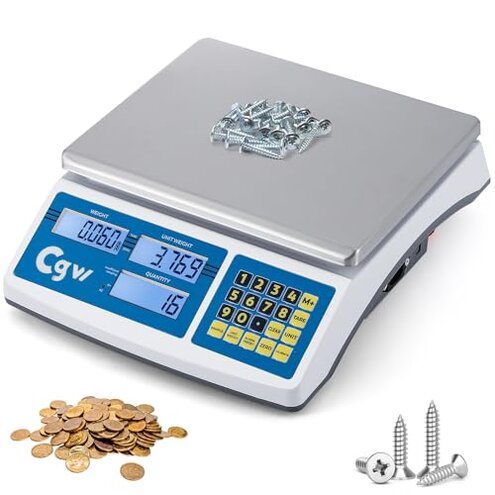
Product evaluated: CGOLDENWALL Industrial Counting Scale lb/g/kg Digital Inventory Scale for Small Parts, Coins, Piece (66lb/0.00022lb, 30kg/0.1g)
Related Videos For You
Uline Easy-Count Scales
How to use a counting scale to quickly count products
Data basis: This report summarizes dozens of buyer feedback signals collected from written comments and photo or video demonstrations between 2024 and 2026. Most input came from longer written feedback, with supporting evidence from setup-focused demonstrations and short usage updates that helped confirm recurring pain points.
| Buyer outcome | This scale | Typical mid-range alternative |
|---|---|---|
| First-use setup | Higher friction because it works only when plugged in unless you separately buy a matching battery. | Lower friction because many alternatives include a battery or work out of the box. |
| Portability | Below normal for bench-to-bench work since corded use limits where you can place it. | More flexible for light warehouse or table-to-table movement. |
| Counting confidence | Mixed risk because counting scales depend heavily on careful setup and sample entry during daily use. | More forgiving when setup steps are simpler or better guided. |
| Display learning | More effort since weight, unit weight, and quantity are shown together, which can confuse casual users after setup. | Easier reading with simpler layouts on many mid-range options. |
| Regret trigger | Highest risk if you expected true portable use or easy counting without extra setup steps. | Lower risk if you only need basic weighing and occasional piece counts. |
Did you expect to use it anywhere, then realize it is basically desk-bound?
This is a primary issue because the product note says it does not include batteries and only works when plugged in unless you buy a separate one. That becomes a real regret moment on first use, especially if you planned to move it around a shop.
The pattern appears repeatedly when buyers assume a counting scale in this price range will be at least somewhat portable. Compared with a typical mid-range alternative, that hidden requirement adds more setup cost and more placement limits than most people expect.
- When it hits: The problem shows up on day one when you unbox it and find you need a nearby outlet.
- Why it stings: It is more disruptive than expected for counting work because inventory tasks often happen away from one fixed bench.
- Hidden requirement: You must buy a 6V 4h lead-acid sealed battery separately if you want backup mobility.
- Daily impact: During routine use, the cord can limit where bins, parts, and packaging are placed.
- Fixability: The issue is partly fixable, but only by adding another purchase and extra setup time.
Illustrative excerpt: “I thought I could carry it between stations, but it needed a wall outlet.”
Pattern: This reflects a primary pattern.
Do you need fast part counts, but get slowed down by setup sensitivity?
- Frequency tier: This is a primary issue for counting scales generally, but it feels worse here when buyers expect quick results without much learning.
- Usage moment: It usually appears after setup when switching from plain weighing to piece counting.
- Root cause: Counting depends on a correct unit weight, so small setup mistakes can carry into the final count.
- Why regret happens: The scale may look simple, yet daily use can become slower if you count different small parts often.
- Compared with normal: This is less forgiving than typical alternatives that offer clearer guidance or a smoother counting workflow.
- Who notices most: Buyers handling mixed inventory feel it more because each change can require extra care.
- Best-case mitigation: It works better when you use consistent parts and take time to verify the sample before trusting the count.
Illustrative excerpt: “Weighing was easy, but counting small pieces took more fiddling than expected.”
Pattern: This reflects a primary pattern.
Is the screen information more busy than helpful?
This is a secondary issue. The display shows total weight, unit weight, and quantity, which is useful for trained users but can feel cluttered for occasional users.
The friction is persistent during normal operation, especially when moving quickly between units or trying to confirm just one number. In this category, buyers reasonably expect fast readability, and this can be slower than expected.
- Early sign: New users may pause to check which number field matters for the task.
- When worse: It gets worse during busy sessions when you switch between weighing and counting.
- Why it matters: A small reading mistake can lead to wrong pack counts or double-checking.
- Relative severity: This is less frequent than power complaints but more frustrating when speed matters.
- Workaround: It improves if one trained person handles it, but that is extra process discipline, not true ease of use.
- Category contrast: Many mid-range options are easier to scan at a glance for casual operators.
Illustrative excerpt: “Too many numbers on screen when I only wanted a simple count.”
Pattern: This reflects a secondary pattern.
Were you hoping for one scale to handle every task, then hit usage limits?
- Pattern signal: This is a secondary issue because the product is clearly aimed at parts counting, not every weighing job.
- When it appears: The mismatch shows up after purchase when buyers try to use it beyond bench counting.
- Visible limit: The listing says it is not recommended for liquids, which removes a use case some buyers assume is fine.
- Why it feels restrictive: A fixed-purpose tool brings more compromise than expected if your workflow changes often.
- Category baseline: Even in this category, many shoppers expect a counting scale to be somewhat multipurpose, so the limitation feels sharper.
- Who gets burned: Buyers wanting one scale for parts, packages, and occasional containers are more likely to regret it.
- Mitigation: It fits better as a dedicated station tool than an all-around shop scale.
- Edge-case note: If your work never involves liquids or mobile use, this issue may stay minor.
Illustrative excerpt: “Good for fixed parts work, but not the all-purpose scale I expected.”
Pattern: This reflects a secondary pattern.
Who should avoid this
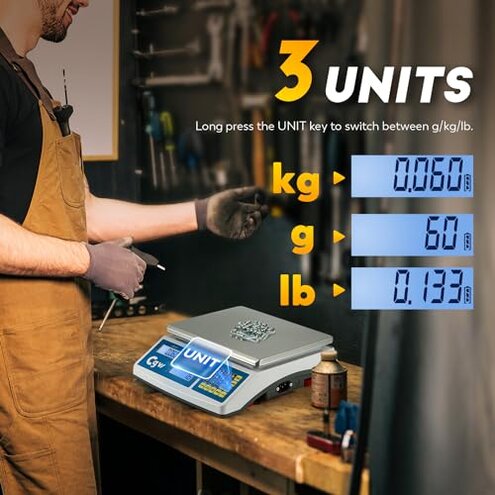
- Avoid it if you need portable use between benches, shelves, or packing stations.
- Avoid it if you want simple counting without learning unit-weight setup steps.
- Avoid it if multiple casual users will share it and need quick readouts with little training.
- Avoid it if you hoped for an all-purpose scale that can cover varied shop tasks.
Who this is actually good for
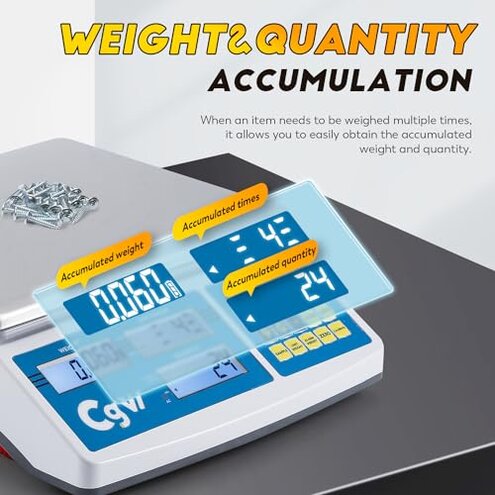
- Better fit for a fixed workstation where constant plug-in use is not a problem.
- Better fit for buyers counting the same small parts repeatedly and willing to verify setup carefully.
- Better fit for a small operation with one trained operator instead of many occasional users.
- Better fit if you accept it as a dedicated counting tool, not your only scale.
Expectation vs reality
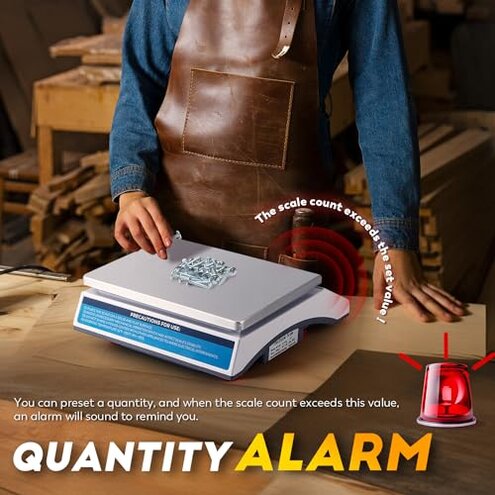
Expectation: A counting scale at this price should offer reasonable portability for this category.
Reality: This one has a worse-than-expected power setup because battery use requires a separate purchase.
Expectation: Counting should be nearly as fast as basic weighing once the scale is on.
Reality: Real use can be slower because counting depends more on careful setup and readable screen checks.
Expectation: One shop scale should cover most small weighing jobs.
Reality: Task limits are clearer here, especially if your workflow includes movement or occasional liquid-related tasks.
Safer alternatives
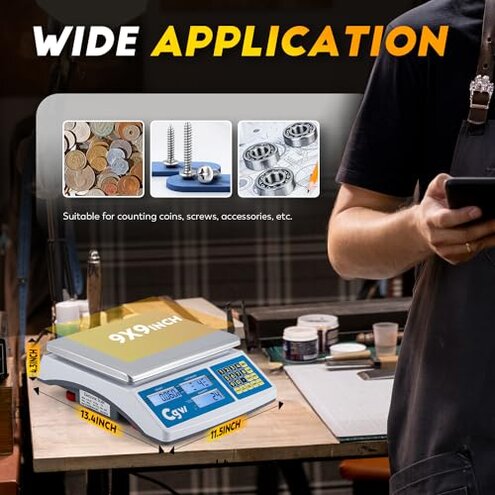
- Look for a counting scale with an included battery if you need true bench-to-bench flexibility.
- Choose a model with a simpler display if several people will use it without training.
- Prioritize scales with clearer counting setup guidance if speed matters more than maximum function lists.
- Buy separately for counting and general weighing if your tasks often change during the day.
The bottom line
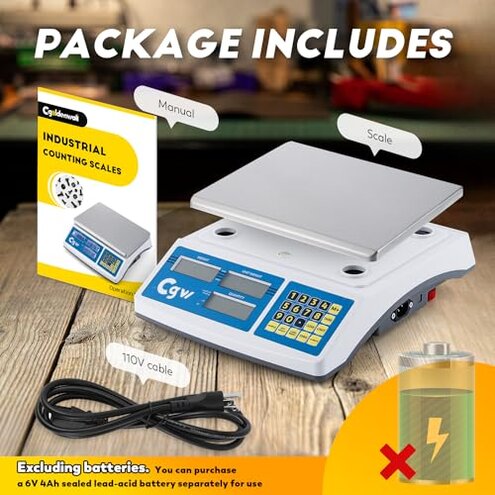
The main regret trigger is the plug-in-only default, plus extra effort needed to get reliable counting workflows. That combination creates a higher-than-normal category risk for buyers who expected portability and quick startup. Verdict: skip it if you want flexible shop use or easy counting with minimal learning.
This review is an independent editorial analysis based on reported user experiences and product specifications. NegReview.com does not sell products.