
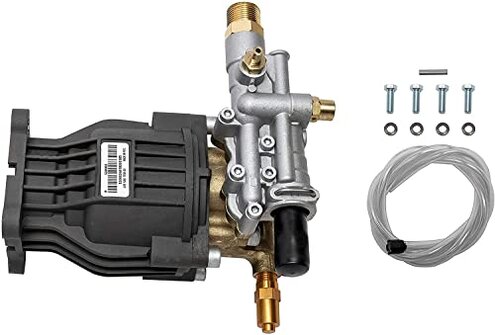
Product evaluated: OEM Technologies 90029 Replacement Pressure Washer Pump Kit, 3400 PSI, 2.5 GPM, 3/4" Shaft, Includes Hardware and Siphon Tube, for Residential and Industrial Gas Powered Machines
Related Videos For You
How to Remove, Replace & Install a Pressure Washer Pump
STOP Paying Repair Shops! Pressure Washer Has NO Pressure?! Check Out This Super Simple Fix!
Data basis: This report summarizes dozens of buyer feedback points collected from written reviews and video-style demonstrations between 2024 and 2026. Most feedback came from detailed written ownership reports, with supporting setup clips and follow-up comments that helped show what happens during installation and after repeated use.
| Buyer outcome | This pump | Typical mid-range alternative |
|---|---|---|
| Fit confidence | Higher risk of mismatch unless shaft, bolt pattern, outlet, and hose setup are checked carefully. | Moderate risk, but many alternatives are a little more forgiving on replacement matchups. |
| Install effort | More setup friction after unboxing when adapters, orientation, or pressure specs do not line up. | Usually simpler if sold as a direct replacement for fewer machine families. |
| Early-use reliability | Mixed; recurring complaints focus on trouble appearing after setup or within repeated use. | More predictable for buyers who match only by shaft and PSI. |
| Long-session tolerance | Less forgiving when bypass heat, repeated starts, or extended cleaning sessions are part of normal use. | Category-normal sensitivity, but fewer reports of surprise shutdown-style frustration. |
| Regret trigger | Buying to save money and then losing time on fit checks, troubleshooting, or replacement. | Paying slightly more up front, but avoiding repeat install work. |
Why does it still not feel like a simple replacement after you bolt it on?
This is a primary issue. The regret moment usually happens during first installation, when buyers expect a straightforward swap and find extra matching steps. This appears repeatedly across feedback and feels more disruptive than expected for a replacement pump.
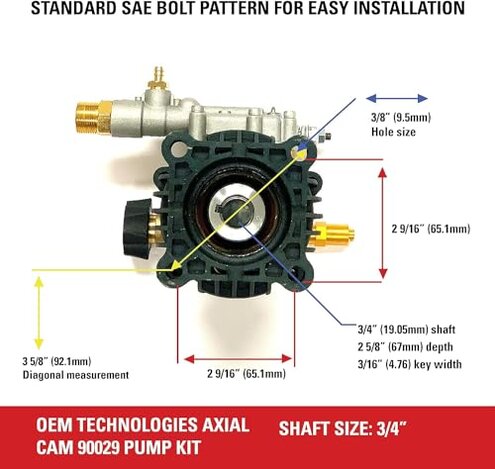
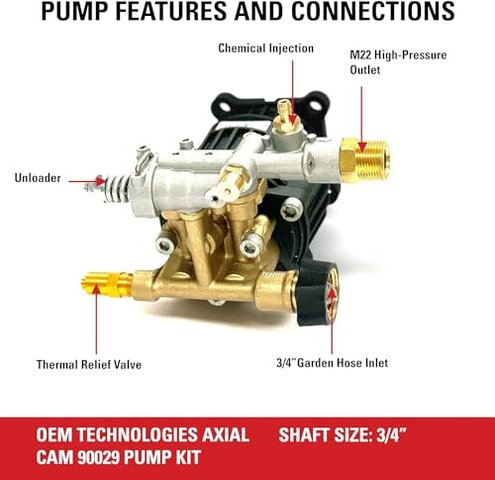
The hidden requirement is that matching the shaft size alone is not enough. Buyers also need the right engine orientation, pressure range, flow rate, and connection style, which is less forgiving than many mid-range replacements.
- Pattern: A recurring complaint is that “fits many” does not mean plug-and-play for every washer with a 3/4-inch shaft.
- When it hits: The problem shows up during setup, especially when reusing an existing hose, wand, or frame layout.
- What buyers notice: Mounting may work, but connections or alignment can still force extra parts, rerouting, or trial-and-error.
- Why it stings: In this category, buyers expect a replacement part to save time, but this one can add extra steps before the machine is usable again.
- Common mistake: Buyers often match by advertised PSI first, then discover compatibility gaps after installation starts.
- Impact: The machine can turn into a half-day project instead of a quick fix, which is more frustrating than a normal accessory swap.
- Mitigation: This is more manageable if you confirm shaft, bolt pattern, outlet, inlet, and hose type before ordering.
Why do some buyers feel the restored pressure does not last?
- Severity: This is another primary issue, because it undercuts the whole reason people buy a replacement pump.
- Pattern: Feedback shows a persistent reliability concern that is not universal, but appears often enough to shape regret.
- When it appears: Complaints usually begin after setup or after repeated cleaning sessions rather than before first start.
- Worsening condition: Problems seem more likely to matter during regular residential use, where buyers expect repeated starts and normal-length washing sessions.
- Buyer symptom: People describe pressure drop, weak cleaning, or a machine that no longer feels restored for long.
- Category contrast: Any pump can fail early, but this feels worse than category-normal because the product is sold specifically as a replacement solution.
- Real cost: The bigger loss is often time and repeat labor, not just the purchase price.
- Fixability: Once pressure consistency is gone, buyers often end up troubleshooting the whole washer to confirm the pump is the cause.
Why does normal pressure-washer use seem to create more hassle than expected?
This is a secondary issue. The trouble tends to show up during daily use, not just at install, when buyers pause spraying or run longer cleaning jobs. It is less frequent than fit complaints, but more frustrating when it occurs because the machine may seem fine at first.
Bypass sensitivity is category-expected, but the regret here is the extra attention it can demand. Compared with a typical mid-range alternative, this pump seems less forgiving if the user pauses often or lets the unit sit pressurized between bursts.
- Early sign: A buyer may notice the pump gets hotter than expected during stop-and-start cleaning.
- Context: This matters most on deck, driveway, and siding jobs where you pause to move furniture or reposition.
- Pattern: Reports of heat-related concern are persistent but secondary rather than the top complaint.
- Practical effect: Users may need to be more careful about idle time than they expected from a “maintenance-free” replacement.
- Why it feels worse: Mid-range pumps in this class are not immune, but buyers expect a little more real-world tolerance during normal pauses.
Why does the lower-maintenance design still leave some buyers doing extra troubleshooting?
- Trade-off: The maintenance-free appeal is attractive, but several buyers still run into diagnosis work when something feels off.
- Pattern: This is an edge-case issue, yet it persists across different ownership situations.
- When it happens: It tends to show up after a weak-performance episode, when users try to determine whether the problem is the pump, hose, unloader, or engine.
- Buyer impact: A sealed, simpler design can mean fewer easy checks for owners trying to understand a pressure loss.
- Category contrast: In this category, easier upkeep usually should reduce owner effort, but here it can shift effort into guesswork when performance changes.
- Hidden burden: If your washer is older, this pump may reveal other system weaknesses that make the replacement feel like only part of the fix.
Illustrative excerpt: “It bolted on, but the hose side turned into a bigger project.”
Pattern type: This reflects a primary compatibility pattern.
Illustrative excerpt: “It worked at first, then the cleaning power stopped feeling restored.”
Pattern type: This reflects a primary durability pattern.
Illustrative excerpt: “Fine for short jobs, but touchy when I paused too often.”
Pattern type: This reflects a secondary heat and bypass-use pattern.
Illustrative excerpt: “Maintenance-free sounded easy, but troubleshooting was not.”
Pattern type: This reflects an edge-case diagnosis burden pattern.
Who should avoid this
- Avoid it if you want a truly simple swap with no measuring, because fit risk is higher than normal for this category.
- Avoid it if your machine earns money or supports frequent jobs, because repeat install labor can cost more than the initial savings.
- Avoid it if you often do long, stop-and-start cleaning sessions, because pause sensitivity can become an everyday annoyance.
- Avoid it if you do not want to troubleshoot multiple washer parts, because weak-pressure diagnosis can become time-consuming.
Who this is actually good for
- Good fit for buyers who already know their exact shaft, bolt, and connection specs and can tolerate extra setup checking.
- Good fit for someone reviving an older washer cheaply and accepting the risk that not every issue will be solved by the pump alone.
- Good fit for short, occasional cleaning jobs where the user can manage idle time carefully.
- Good fit for hands-on owners who view installation friction as acceptable if they can avoid replacing the full machine.
Expectation vs reality
Expectation: A replacement pump should be a straightforward match if the shaft size looks right.
Reality: Compatibility often depends on more details than many buyers expect, which creates a higher-than-normal mismatch risk.
Expectation: “Maintenance-free” should mean less hassle after installation.
Reality: Lower upkeep does not always mean easier ownership when pressure problems require broader troubleshooting.
Expectation: It is reasonable for this category to handle normal pauses during household washing.
Reality: This pump can feel less tolerant of stop-and-start use than many buyers expect from a mid-range replacement.
Safer alternatives
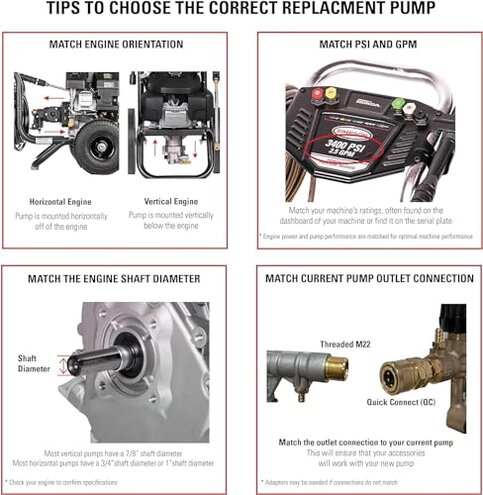
- Choose direct-fit listings that name your exact washer model, because that directly reduces the hidden compatibility problem.
- Prefer pumps with clearer connection guidance if you plan to reuse old hoses and accessories, which helps avoid install surprises.
- Buy from a seller with easy returns when replacing an older unit, because fit and pressure-restoration results can be less predictable.
- Consider a full washer replacement if your current machine already has several aging parts, which avoids blaming the pump for a multi-part failure.
- Pick a more heat-tolerant design if your jobs involve frequent pauses, which directly addresses the stop-and-start frustration noted above.
The bottom line
Main regret trigger: Buyers often choose this pump to save money, then lose that savings in fit checks, troubleshooting, or short-lived performance.
Why it exceeds normal risk: Replacement pumps already carry some compatibility risk, but this one appears less forgiving than typical mid-range alternatives when setup details or real-world use are not ideal.
Verdict: If you need a low-drama replacement, this is a product to approach carefully or skip unless you can verify every fit detail before buying.
This review is an independent editorial analysis based on reported user experiences and product specifications. NegReview.com does not sell products.