
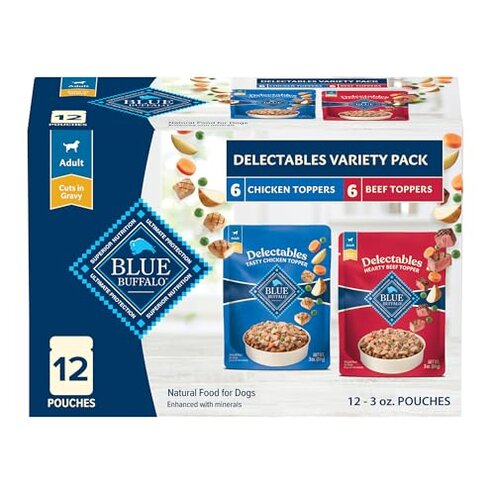
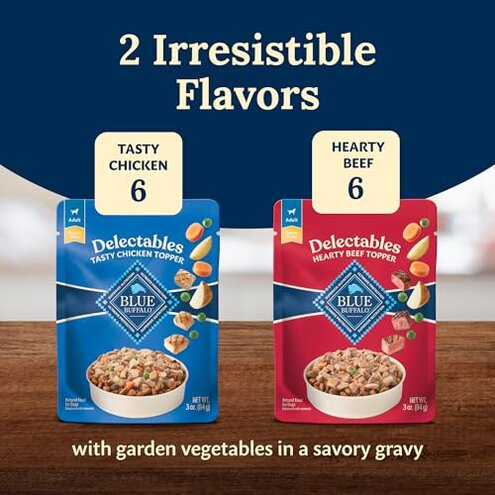
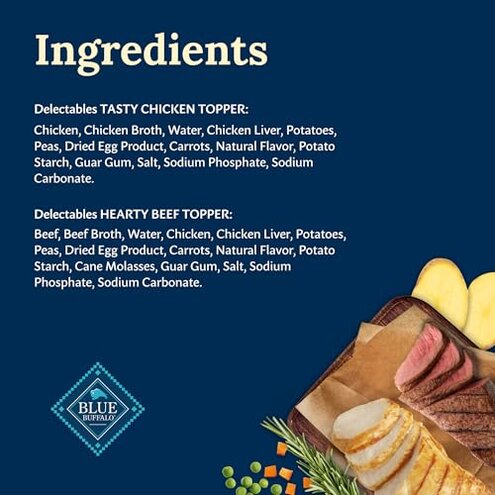
Product evaluated: Blue Buffalo Delectables Natural Wet Dog Food Topper Variety Pack, Tasty Chicken, Hearty Beef, Tender Turkey, & Savory Lamb Dinner 3-oz (24 Pack- 6 of Each Flavor)
Related Videos For You
let’s talk dog food toppers! 🙂↕️🫶🏼 FD raw: @openfarmpet #dogshorts #dogfeeding #dogfood
Human Foods Dogs SHOULD Eat 🐶 6 Best Kibble Toppers
Data basis: This report draws from dozens of buyer comments collected from written feedback and short video-style demonstrations between 2024 and 2026. Most feedback came from written reviews, with supporting visual posts that helped confirm recurring use problems like pouch handling, food texture, and picky-dog acceptance.
| Buyer outcome | This product | Typical mid-range alternative |
|---|---|---|
| Dog acceptance | Mixed; recurring reports of some dogs loving it while others refuse whole flavors | More predictable; flavor packs usually have fewer hard rejects |
| Serving mess | Higher; gravy-style topper can add cleanup during daily feeding | Moderate; many alternatives pour out with less scraping |
| Portion fit | Less flexible; single pouches can feel awkward for small add-ons | Usually easier; tubs or cans allow more portion control |
| Packaging consistency | Higher-than-normal risk; damage or hard-open pouch complaints appear repeatedly | Lower risk; still possible, but less frustrating in daily use |
| Regret trigger | Buying a full variety pack and learning your dog rejects several flavors | Single-flavor testing reduces waste before committing |
Why does a variety pack feel risky if your dog is picky?
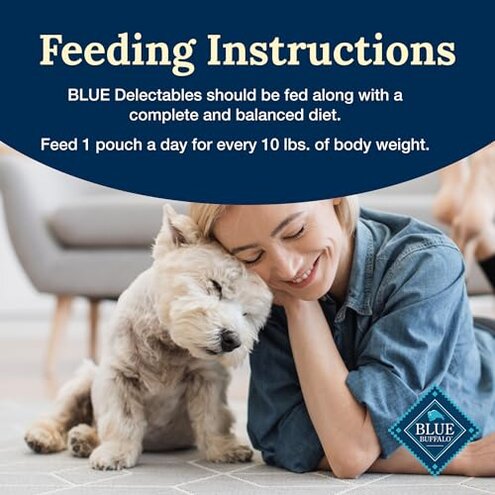
This is a primary issue. The regret moment usually happens in the first few days, when a dog eagerly eats one pouch but ignores another flavor from the same box.
The pattern appears repeatedly. That makes the value trade-off worse than expected, because this format pushes you into multiple flavors before you know which ones will actually get eaten.
During daily feeding, the problem gets more obvious when you rotate flavors instead of sticking to one accepted option.
Compared with typical toppers, this feels less forgiving because a mid-range alternative often lets you test one flavor first instead of wasting several pouches.
- Early sign: A dog may lick the gravy but leave the meat pieces behind on first use.
- Pattern: Flavor acceptance is not universal, but mixed reactions are among the most common complaints.
- Impact: Uneaten pouches create waste, especially if one or two flavors become repeat rejects.
- Trade-off: Variety sounds helpful, but it can become more frustrating than a single-flavor option when your dog has clear preferences.
- Mitigation: The safest approach is slow testing, though that reduces the convenience a variety pack is supposed to provide.
Illustrative: “My dog devoured chicken, then sniffed lamb and walked away.” Primary pattern tied to uneven flavor acceptance.
Is the pouch format more annoying than it looks?
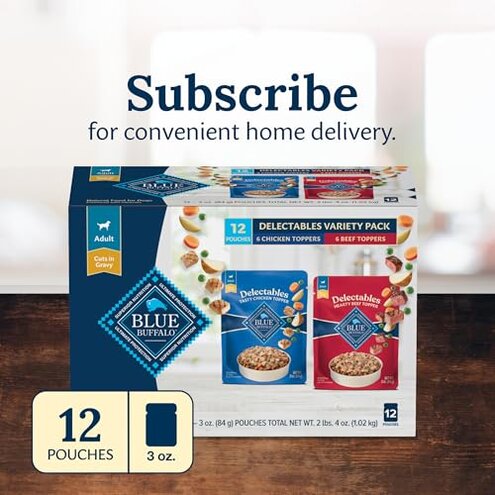
- Frequency tier: This is a secondary issue, but it becomes more disruptive with twice-daily feeding.
- When it shows up: The frustration happens at serving time, especially when trying to empty thick food quickly.
- What buyers notice: Food can cling to the inside, which means squeezing and scraping instead of a clean pour.
- Why it matters: That adds extra steps every meal, which is more upkeep than many mid-range canned or tray options.
- Worse conditions: It feels more annoying when feeding multiple dogs or mixing with kibble in a hurry.
- Hidden requirement: You may need a spoon or finger scrape to get a full serving out, which is less convenient than the single-serve idea suggests.
- Fixability: You can tear wider and knead the pouch first, but that only partly helps.
Illustrative: “Easy-open sounded nice, but I still had to scrape every pouch.” Secondary pattern linked to daily handling effort.
Does the texture create more mess than a normal topper?
- Severity: This is a primary issue for buyers who want a quick, tidy kibble topper.
- Pattern statement: Mess complaints appear recurringly, especially from people using it as a mix-in rather than a full treat.
- Usage moment: The issue shows up right after opening when gravy spreads fast across the bowl or feeding area.
- Why worse than expected: Wet toppers are never spotless, but this can feel messier than typical because it combines chunks and gravy in a pouch that is not always clean to dispense.
- Real impact: Some dogs separate the liquid from the solids, which leaves residue in bowls and around muzzle areas.
- Worsening condition: It gets more noticeable with long-haired dogs, floor feeding, or when using only part of a pouch.
- Attempted fix: Mixing thoroughly with dry food helps, but then you lose some of the quick topper convenience.
- Regret angle: Buyers expecting a neat treat often end up with cleanup that feels high for a simple add-on food.
Illustrative: “It turned dinner into a sloppy bowl and beard cleanup.” Primary pattern reflecting mess during routine use.
What happens if the box arrives damaged or pouches are imperfect?
- Frequency tier: This is an edge-case issue, but more frustrating when it happens than flavor rejection.
- Pattern: Packaging complaints are less frequent but persistent, mainly around damaged outer boxes or compromised pouches.
- When buyers notice: The problem appears on delivery or only when opening individual pouches later.
- Why it hits harder: In pet food, packaging problems can trigger trust concerns immediately, even before serving.
- Category contrast: Some shipping wear is normal, but this feels worse than expected because single-serve pouches are bought for convenience and confidence.
- Impact: One damaged pouch can make buyers question the rest of the pack, which raises waste risk.
- Fixability: Inspection on arrival helps, but it creates a hidden checking step many buyers do not expect with shelf-stable pet food.
Illustrative: “A few pouches looked rough, so I stopped using the box.” Edge-case pattern tied to packaging confidence.
Who should avoid this
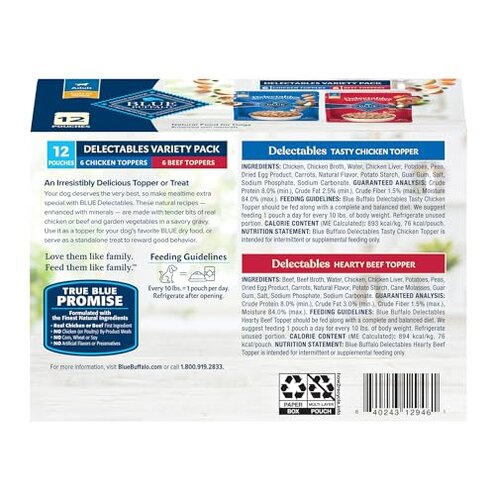
- Picky-dog owners should avoid it if wasted flavors will bother them, because mixed acceptance is a primary pattern in variety packs.
- Neat-feed households may want a different format if bowl mess and pouch scraping exceed your normal tolerance.
- Multi-dog homes may get annoyed faster, because the serving friction repeats with every pouch and every meal.
- Value-focused buyers should be careful if they expect every flavor in a 24-pack to get used consistently.
Who this is actually good for
- Dogs with broad tastes may do fine if you are willing to tolerate occasional pouch mess for flavor variety.
- Owners needing portioned toppers may still like it if single-serve convenience matters more than scraping out every bit.
- Treat-style users can make better use of it when feeding occasionally instead of every day, reducing the cleanup burden.
- Trial-minded buyers may accept the rejection risk if the goal is simply discovering one or two favorite flavors.
Expectation vs reality
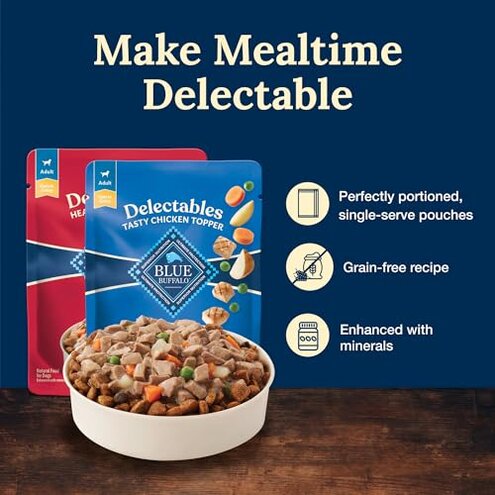
Expectation: A variety pack should make feeding easier by covering different tastes.
Reality: Flavor mismatch can make it harder, because accepted and rejected pouches end up in the same box.
Expectation: Single-serve pouches should mean fast, clean meals.
Reality: Pouch cleanup and thick contents can add more handling than many buyers reasonably expect for this category.
Expectation: Some wet-food mess is reasonable for this category.
Reality: The combination of gravy texture and pouch dispensing can feel worse than expected during everyday kibble topping.
Safer alternatives
- Test single flavors first before buying mixed packs, which directly reduces the main regret trigger of flavor rejection.
- Choose tubs or small cans if you hate scraping pouches, since they usually offer easier serving and portion control.
- Look for thicker pâté-style toppers if cleanup matters, because they often spread less than chunky gravy formulas.
- Buy from sellers with careful packing if damaged packaging worries you, since confidence drops fast once pouches look compromised.
The bottom line
The main regret trigger is buying a full variety pack before knowing whether your dog accepts every flavor. That risk exceeds normal category tolerance because it combines flavor uncertainty, pouch-serving friction, and mess in a convenience-focused format. Verdict: avoid it if your dog is selective or if you want a clean, low-effort topper routine.
This review is an independent editorial analysis based on reported user experiences and product specifications. NegReview.com does not sell products.